How to Choose a Cordless Handheld Vacuum: Buying Guide

Disclosure: This page contains affiliate links. If you buy through them, we may earn a commission at no extra cost to you.
Handheld vacuums come in all shapes and prices, and the specs can be confusing. What does "Pa" mean? How much battery do you really need? This guide explains the features that matter so you can choose a cordless handheld vacuum that fits how you'll actually use it.
Start With How You'll Use It
Ask yourself what you'll clean most often:
- Car interior: you need a slim crevice nozzle and something compact enough to store in the car.
- Pet hair: a brush nozzle and an easy-to-empty container matter most.
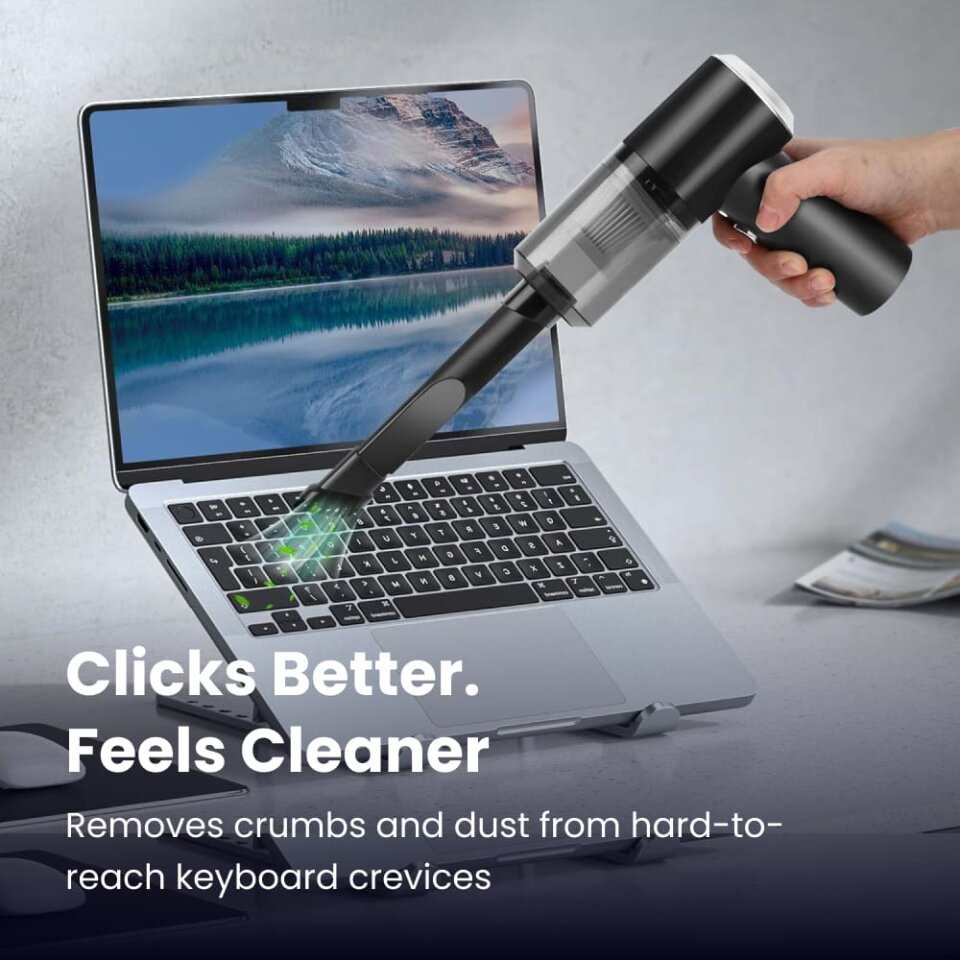
- Desk and keyboard: a small, light model with a soft brush.
- Kitchen crumbs: something you can grab from a drawer in one second.
- Whole floors: a handheld isn't the right tool. Look at stick or full-size vacuums instead.
Suction Power (Pa)
Suction is often measured in pascals (Pa). Higher numbers mean stronger suction. For small handhelds, a few thousand Pa is typical and handles crumbs, dust, sand and pet hair on most surfaces. Keep in mind that nozzle design matters too: a narrow nozzle concentrates suction where you need it.
Battery and Charging
- Runtime: for quick cleanups, 15–30 minutes per charge is plenty. Most jobs take only a few minutes.
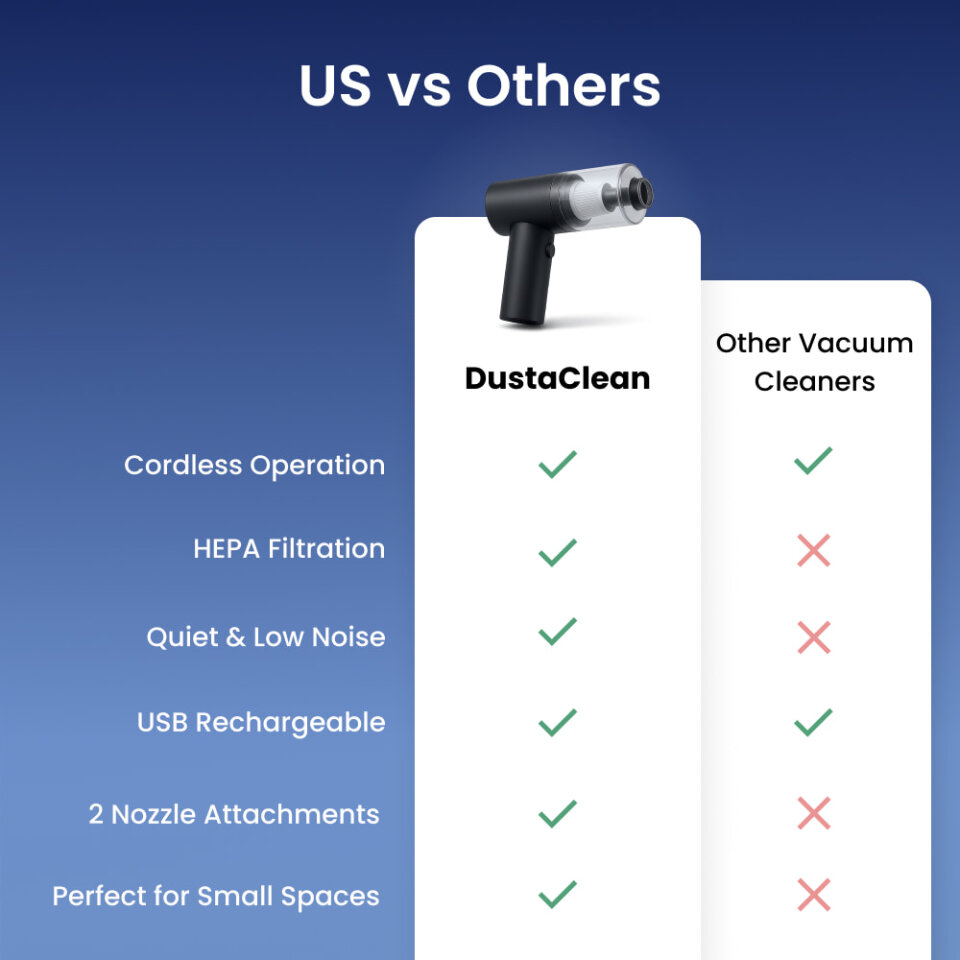
- Charging type: USB charging is very convenient. You can charge from a laptop, a car port or a phone adapter, with no bulky dock.
Weight and Size
This is the most underrated feature. A heavy handheld is tiring to hold above shoulder level or inside a car. Models around 1 lb are easy to use with one hand and small enough to keep in a drawer or glove box, which means you'll actually use it.
Filters
Look for a washable filter. It saves money on replacements and keeps suction strong. HEPA-style filters help capture fine dust instead of blowing it back into the air.
Nozzles and Attachments
Two attachments cover most jobs:
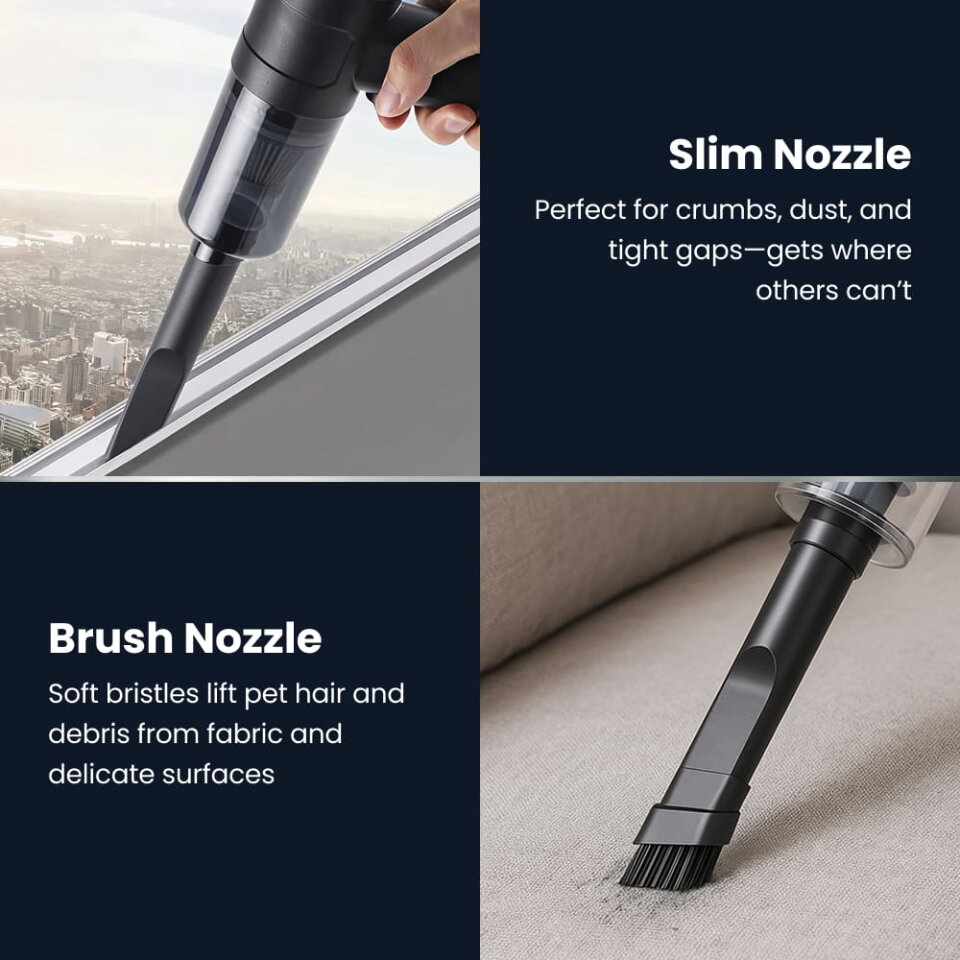
- Crevice nozzle: for seat gaps, corners, cup holders and tracks.
- Brush nozzle: for fabric, keyboards, vents and pet hair.
Other Things to Check
- Noise: quieter models are nicer at home, in the office and around pets.
- Emptying: a container that opens easily over the trash saves frustration.
- Wet or dry: most compact handhelds are dry-only. Don't use them on liquids.
- Guarantee: a money-back guarantee lets you try it without much risk.
Quick Buying Checklist
| Feature | What to look for |
|---|---|
| Suction | A few thousand Pa for small messes |
| Battery | 15–30 minutes per charge |
| Charging | USB is the most flexible |
| Weight | Around 1 lb for one-hand use |
| Filter | Washable, HEPA-style |
| Nozzles | Crevice + brush |
| Guarantee | 30-day money-back or better |
FAQ
Is a cordless handheld vacuum worth it?
If you often clean small messes, yes. It saves you from setting up a full vacuum for every crumb, and it's great for cars and furniture.
How many Pa is good for a handheld vacuum?
For small handhelds, a few thousand Pa is typical and works well on crumbs, dust and pet hair.
Can a handheld vacuum replace a regular vacuum?
No. It's best for quick, targeted cleanups. Use a full-size or stick vacuum for whole-home floors.